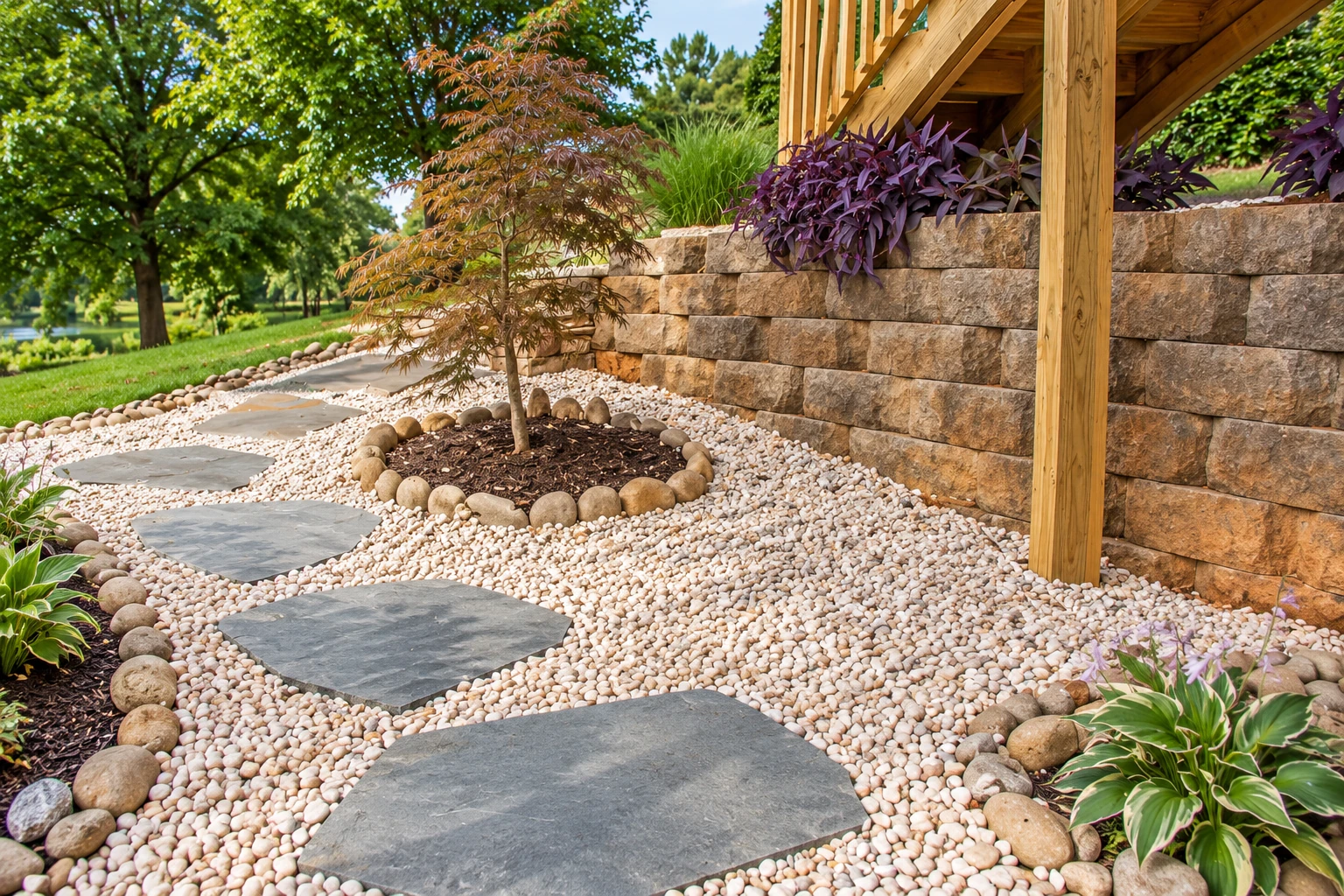
Stone veneer installation in Macon GA - stone on a sound wall, flashed at the edges
Want a plain wall or foundation to look like stone? We check the wall first, then set and flash the stone so it lasts.
- Fully licensed and insured.
- Free in-person estimates.
- We respond within 1 business day.
Is stone veneer right for the wall on your house?
Stone veneer installation in Macon means setting manufactured stone onto an existing wall with mortar, so a plain foundation, column or whole wall front ends up looking like natural stone. The stone is cast from cement, lightweight aggregate and color.
Most people call me with a gray block foundation they're tired of looking at, a column they want to dress up, or old stone that's coming loose. The price mostly comes down to how many square feet you're covering, what shape the wall behind is in, how much prep it needs before mortar will grip, how many windows, doors and corners need flashing, and the stone you pick. The schedule turns on that same prep, any brick repair the wall needs first, the weather and permit review, and your estimate spells out the materials and steps so you know what you're paying for.
What tells you a wall needs stone, or new stone?
Bare block below the siding
A strip of gray block between the ground and the siding usually just means the builder left the foundation plain, and stone can dress it up if the block is solid. Waiting costs you nothing there, but if that block has cracks, have them looked at before anything covers them.
Stone that's cracked or loose
Old veneer with cracks, hollow-sounding pieces or stones on the ground usually means water got behind it or the mortar never bonded right. The longer it goes, the more water reaches the wall underneath, and a patch job turns into tearing off the whole face and starting over.
Dark streaks under windows
Stains, white crust or damp spots spreading below a window or along the bottom of a stone wall usually point to flashing that's missing or has failed. Left alone, that water keeps soaking the wall behind, and on a wood-framed wall it can rot the sheathing before you see anything from outside.
How we install stone veneer
Before any stone goes up, I check that the wall behind it is sound, because stone can't cover for a bad wall and only hides the trouble until it comes through. Once the wall is right, we clean and prepare the surface so the mortar grips, put up flashing, a barrier that turns water back out, then set the stone in mortar course by course, fill the joints and clean up. Industry installation guidance says exterior stone needs flashing at every opening through the wall and along the bottom edge of the stone, so look for those on any estimate you compare. We take extra care there and at the edges, because that's where water tries to get in.
Sometimes the wall behind isn't worth saving, or there isn't one yet. We build new concrete block walls that give stone a solid backing, and when a foundation is failing we handle foundation block wall installation first, so the stone goes on something that will hold.
Stone over block or brick
This suits a house with a solid block foundation or brick wall, since sound masonry makes a good backing once it's clean and rough enough for mortar to grip. If the block or brick needs repair, we do that before the stone.
Stone over a wood-framed wall
This suits additions, porches and other framed walls with wood sheathing behind the siding. One maker's summary says building codes for stone over wood sheathing often call for a layered water barrier, or a barrier plus a drainage mat or rainscreen, so the layers behind the stone matter as much as the stone itself.
A rainscreen gap behind the stone
This suits a wall that takes a lot of water or one where you want extra protection for what's behind it. Industry guidance calls a rainscreen, a small drainage gap behind the stone, an optional technique that helps water drain out and lets the wall dry faster.
Get your stone veneer estimate, free and on site
We reply within one business day, and the estimate is free, on site and comes with no obligation. After you send the form, we set a time for me to come look at your wall, tell you what I think is going on and write up the scope.
(478) 309-1109What Macon's permit and design review rules mean for stone veneer installation
Macon-Bibb County takes permit applications and issues permits through Community Connect, its online portal, and issues them only to the license holder. So when your stone job needs a permit, it goes through our account, and we handle the application and the inspections. The county decides whether a given job needs one, and we check that for your wall before work starts. If your property is zoned HR1, HR2, HR3, HC, HPD, HPD-BH, CBD-1 or CBD-2, it sits in one of the county's design review districts. There, a Certificate of Appropriateness and zoning compliance come before work on any part of the house visible from the street, sides and rear included, so stone on those walls waits for that approval. You can check whether your property needs a Certificate of Appropriateness, and we'll help you through the review.
We're based in Macon and work across Middle Georgia, and the stone calls look a lot alike from city to city. We see the same older brick homes and plain block foundations on jobs in Warner Robins and Perry, and the first step there is the same as here, finding out what's behind the wall before we cover it.
What happens when you call about stone veneer in Macon?
Call or send the form
Call (478) 309-1109 or send the form, and tell us which wall you want covered and roughly how big it is. We'll set a time for me to come see it.
I look at the whole job
I come out myself and look at the wall and everything around it, down to the gutters and downspouts, since water from a bad downspout ends up behind the stone. Your estimate spells out the materials and the steps, so you can line it up against other bids and see what each one includes.
The crew sets the stone
When the job needs a permit, we take care of the paperwork, then our lead mason and crew do the prep, flashing and stonework. I check in along the way, so I see the wall behind before it's covered.
We walk it together
When the stone is up and the joints are cleaned, I walk the finished wall with you before we call it done. Ask anything you like, because I want you to know what we did and why.
Frequently asked questions
How much does stone veneer installation cost per square foot?
Stone veneer installation across the US usually costs about $25 to $40 per square foot, and that's the national market range for installed stone, not a quote for your wall. A wall that needs repairs or a mesh base before the stone tends to land higher. Your estimate lays out the materials and steps for your own job.
Can stone veneer go over my existing wall?
Usually, if the wall is sound, but industry guidance says stone shouldn't go over a wall that's deteriorating or one covered in EIFS, the foam-and-stucco siding system. One maker's guide says the surface has to be free of dirt, paint and waterproofing and rough enough for mortar to bond, so a painted or slick wall may need washing or blasting first. Otherwise lath and a scratch coat, a wire mesh and a base layer of mortar, go on before the stone.
What causes stone veneer to fail?
Most of the time it's the installation, since industry guidance says field workmanship tends to be the main source of problems when stone veneer has trouble. The same guide says stone installed to its recommended practices can perform as intended for decades. So the care that goes into the prep, the flashing and the setting decides how long yours lasts.
Can stone veneer be installed in cold or hot weather?
It can, as long as the fresh work is protected. An industry specification calls for protecting it when it's 40°F or colder, and from drying too fast when the air is over 100°F, before, during and after the job. On those days we either plan around the weather or cover the fresh work through it.
How high above the ground should stone veneer start?
On exterior stud walls, one maker's guide holds the base flashing at least 4 inches above the soil. Ask any contractor where the bottom edge of your stone will sit, because stone buried in dirt or mulch stays wet.
How long does stone veneer installation take in Macon?
The wall prep usually sets the pace more than the stonework does. Repairs to the backing wall, a mesh base that has to set up, very hot or cold days, and any permit or design review all add time. I'll tell you which of those apply once I've seen your wall.
Macon, GA
Send us a few photos of your wall
Photos, the wall's rough size and whether your property sits in a design review district let me show up already knowing what to look for.